
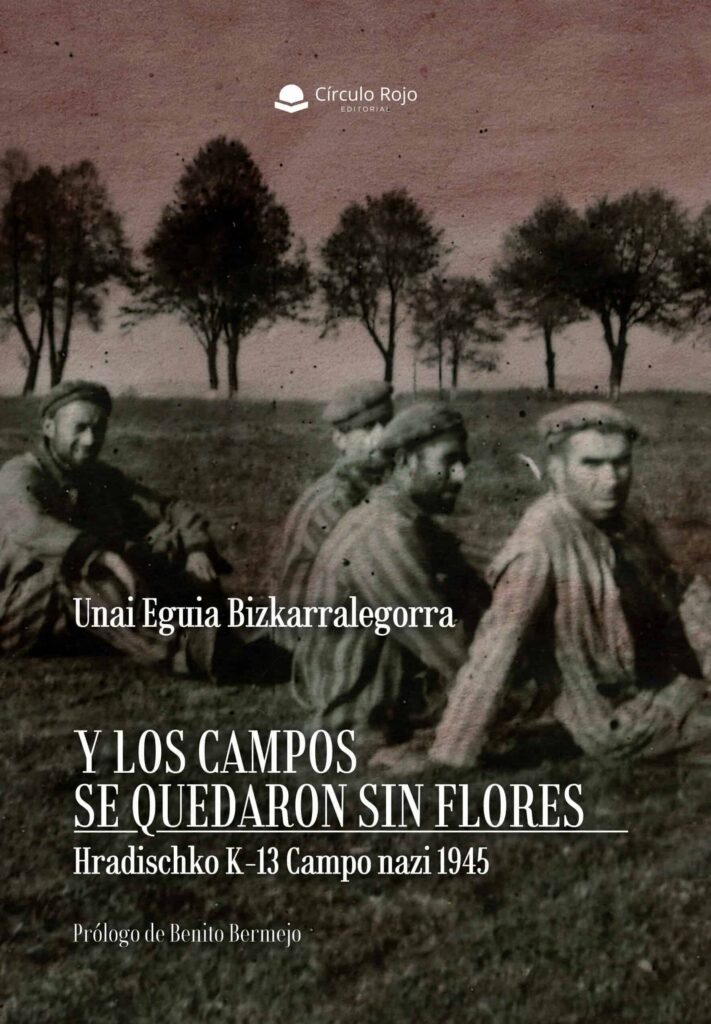
In the library of Antas we have the book of Unai Egui Bizkarralegorra titled “Y los Campos se quedaron sin flores” of the publishing house Círculo Rojo.
In this book we can find a dedication from the author himself, who writes the following: “for the readers of the Biblioteca de Antas. I hope that these lines will help to ensure that the life of Antonio Clemente will not fall into oblivion”.


In this novel Unai tells us the story of the Spanish deportees in the Nazi concentration camp in the Czech town of Hradistko, among whom is the Antuso Antonio Clemente Jódar.

This year a tribute was held in Prague on April 14-15 to Fratisek Suchy, director of the Prague crematorium, his wife and son.

The City Council of Antas has received an invitation to attend these events but for reasons of availability has not been able to attend any representation of Antas.

Antas will be present at the planting of a Guernica tree sapling and for its growth a portion of the rich Antasian soil will be deposited.
They also broadcasted the TV version of the documentary “The secret of the crematorium of Strasnice”. The high point was the scene recorded in Antas with the relatives of Antonio Clemente Jódar, Unai Eguia and Luis Artero. If everything goes according to plan, by the end of October or November the book “Y los campos se quedaron sin flores” and the documentary “El secreto del crematorio de Strasnice” (Popel) will be presented in Antas.
The Secret of the Strašnice Crematorium (original title Popel ashes) is a moving documentary that intertwines history, memory and civil courage. It narrates the investigation of a professor and a relative of a deportee who disappeared during World War II, who, driven by the need to know and to honor their ancestors, undertake a journey from the Basque Country to Prague.
What begins as a personal quest becomes a historical discovery: the story of the Czech František Suchý and his son, who, defying the Nazi regime, managed to save the names and ashes of more than 2,200 victims of the Holocaust in the crematorium of Strašnice. A heroic act of silent resistance that restores identity to the forgotten and offers, eighty years later, closure to those still searching for answers.

