
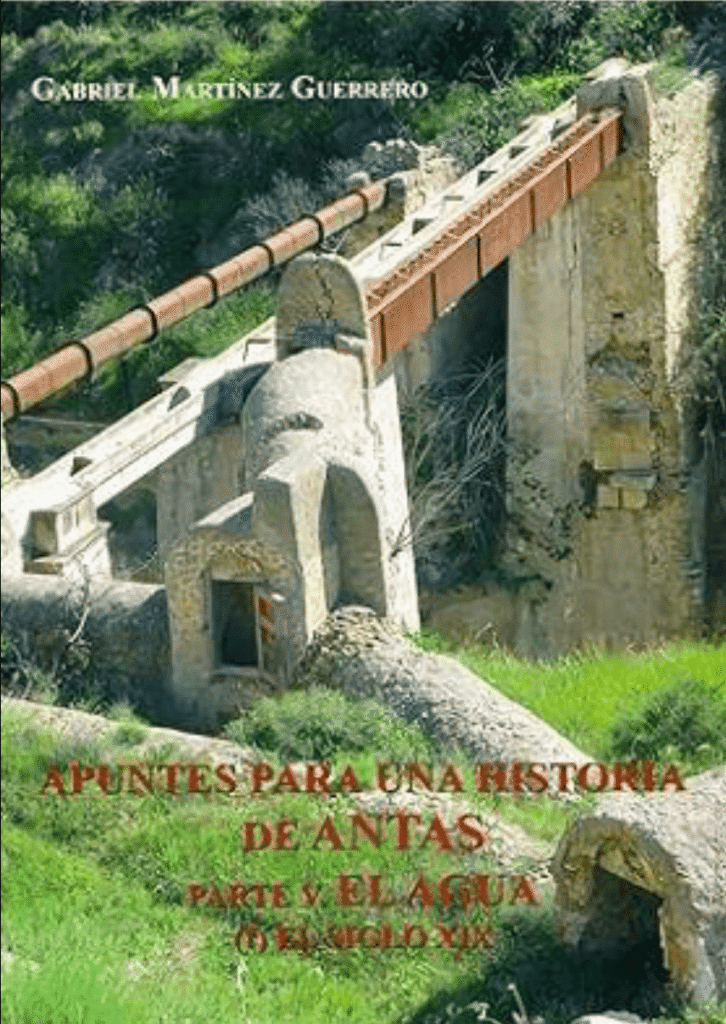
Before entering in matter to manifest that for the understanding of the subject it is essential the reading of our previous chronicler D. Gabriel Martínez Guerrero titled Notes for a history of Antas: part V The Water in the XIX century.
Throughout the eighteenth and nineteenth centuries there were several conflicts related to the management and distribution of water resources, both within the municipality itself and between different pagos and localities. Disputes are documented between pagos such as Mendras and La Huerta, as well as between La Huerta and Los Llanos in relation to the use of surplus flows. However, the most relevant conflicts were between different municipalities, especially the dispute between Antas and Vera.
In the case of Antas, an additional problem arises because the municipality of Vera had a concession for the use of water in the area known as Cabezo del Moro, located in Fuente Nueva, in the area of Real Alto. In 1791, Vera requested the derivation of water from this spring, motivated by the significant decrease in the flow of its two main sources of supply: the Fuente Chica and the Fuente Grande.
In various pagos of the municipality of Antas, located on the banks of the river and the fertile plain – such as Jauro, La Huerta, Aljariz, Mendras, Macura, El Chopo and Algarcel – there were natural water springs that spontaneously gushed forth. These waters were for communal use and, in case of surplus, they were redistributed among neighboring pagos for the irrigation of agricultural lands. An example of this practice can be seen in 1805, when the Town Council of Antas proceeded to establish irrigation shifts (tandeo) in the aforementioned pagos, as well as in El Mayor, Morjana and Rotilla, which also benefited from these flows.
Likewise, there is documentary evidence that on February 24, 1798, several landowners met to declare the construction of an irrigation ditch to carry water to the estates of Los Llanos de San Roque, Granadico, El Mayor and the Jandecae area, and the waters derived were classified as “new irrigation”, preferably receiving the surplus flows from the estate of La Huerta.
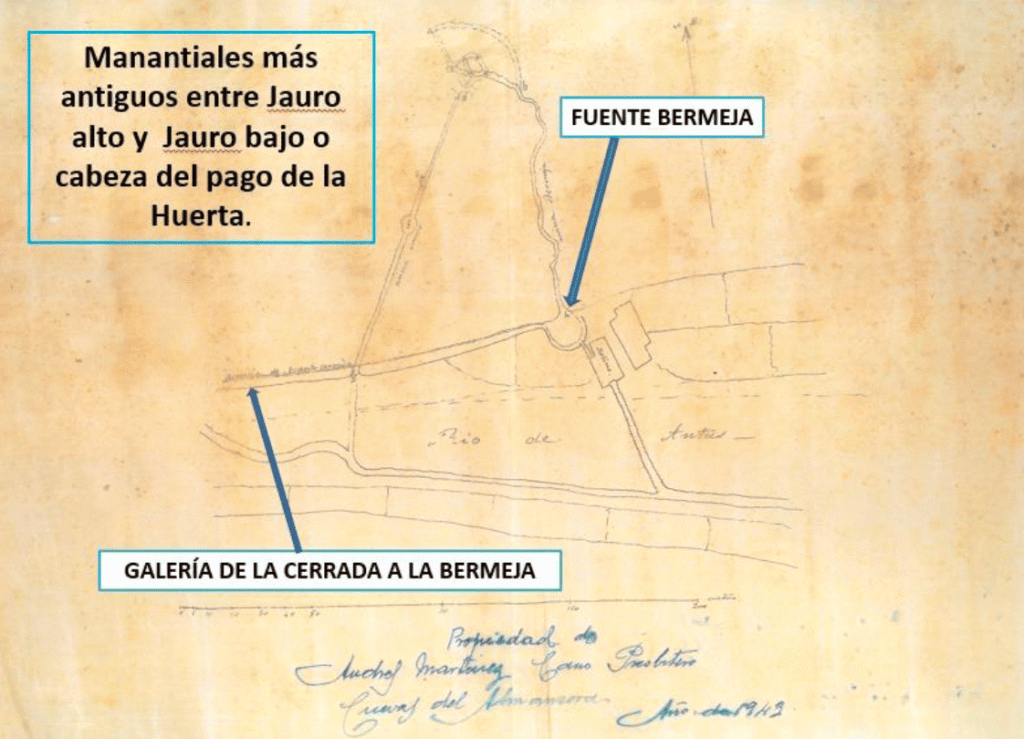
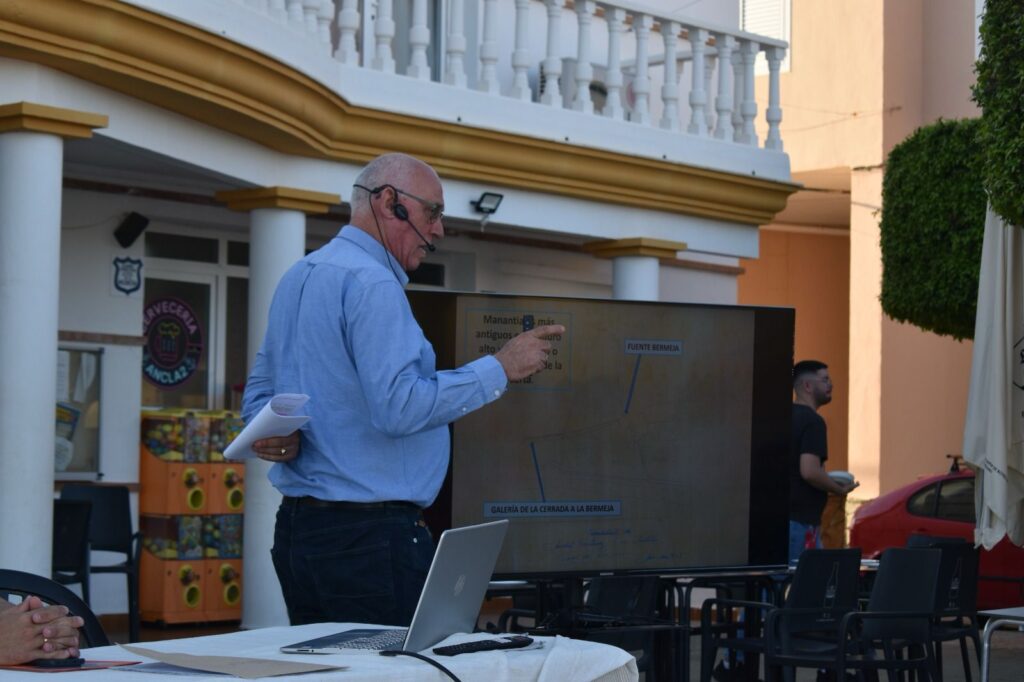
This map was provided by Mr. Pedro Giordano Márques Martínez. As I explained in the act of taking office as official chronicler, the oldest documented springs are located in the area between Jauro el Alto -where the Fuente de la Cerrada is located- and Jauro el Bajo, also known as the head of the pago of
La Huerta. This area extends from the spot known as Charco de las Palomas to the sector called La Viga, where the Bermeja Fountain is located. Historically, this geographical strip has been referred to by the names of “Río de los Molinos” or “Alameda del Rey”, due to its water wealth and its use for agricultural and industrial purposes.
During the 1840s there was a notable decrease in the flow of the springs, which generated a growing concern among the owners and landowners of the Los Llanos, Mendras, El Chopo and Macura estates, who began to take steps to locate and exploit new water resources.
At the same time, in the municipality of Vera, private initiatives for the collection and transport of water began to emerge, highlighting the creation of entities such as the Sociedad Hidráulica de Amigos del País, whose main objective was to channel the water from the Cabezo del Moro spring to the urban center of Vera.
It is worth mentioning a relevant episode that occurred in 1844, when Mr. Ramón Orozco Gerez initiated a legal conflict with a young Mr. Luis Giménez Cano, only 25 years old. To face this dispute, Orozco Gerez grants general power of attorney to Mr. Miguel Salamanca, resident in Vera, in order to represent him in the legal process related to the water rights.
As a result of the disentailment of Madoz, promoted by the minister Pascual Madoz in 1855, the surplus waters of the spring of Fuente Nueva began to be auctioned publicly. In this context, authorization was obtained from the Civil Governor to transfer the water from the Fuente del Moro, also allowing the sale of the surplus water. Ramón Orozco Gerez was the main driving force behind these negotiations and operations.
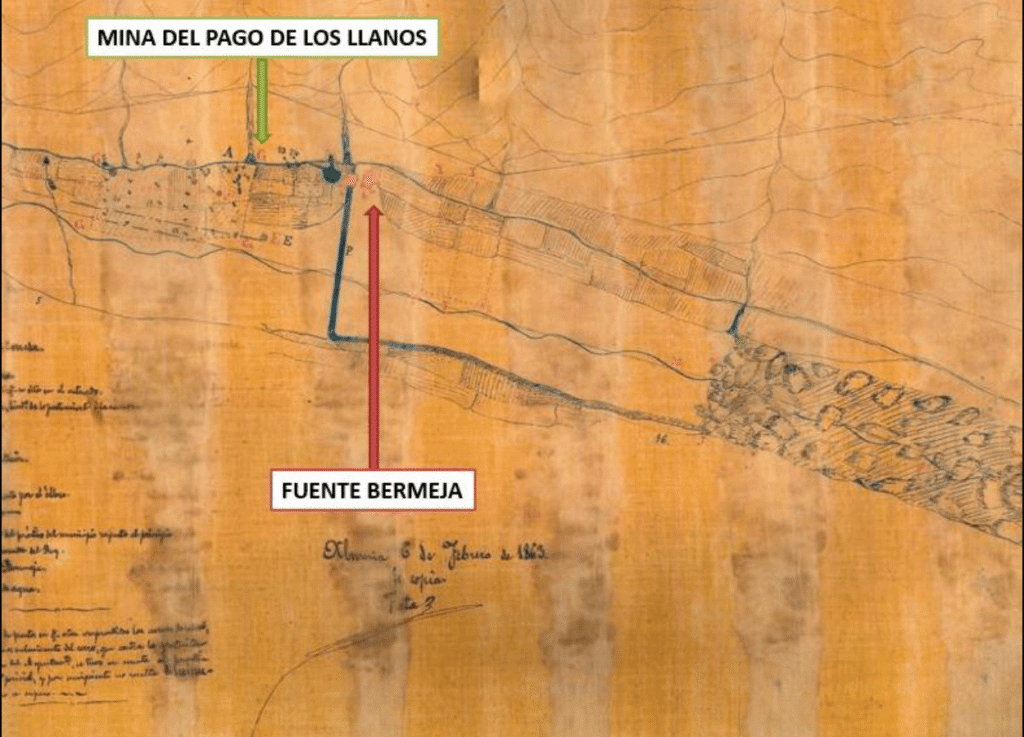
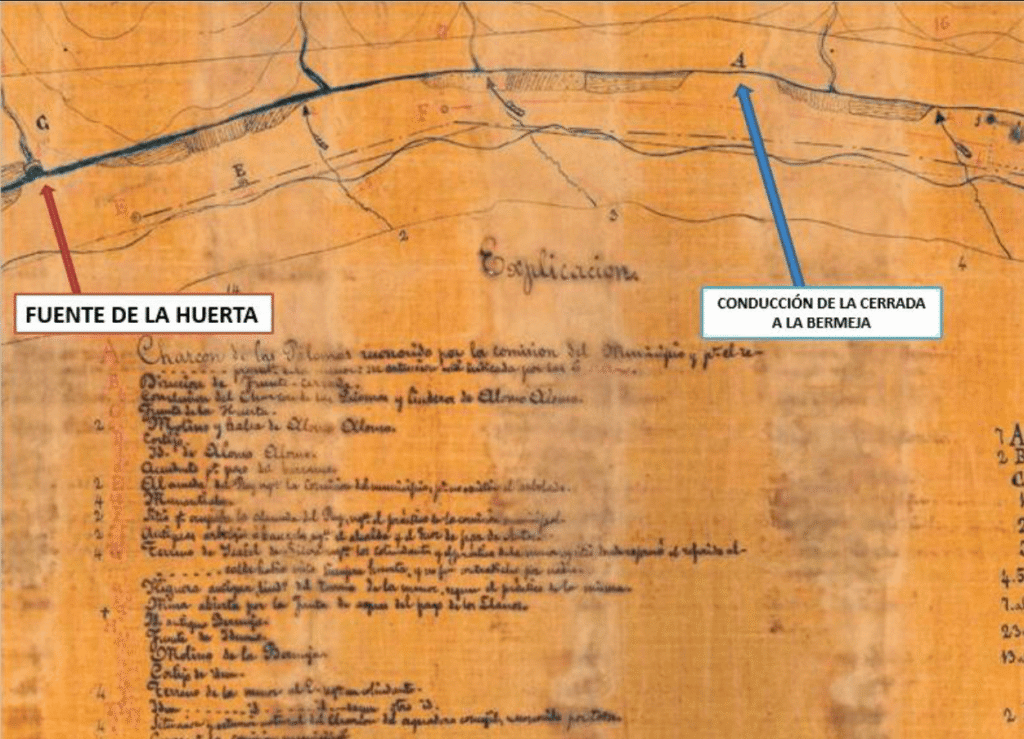
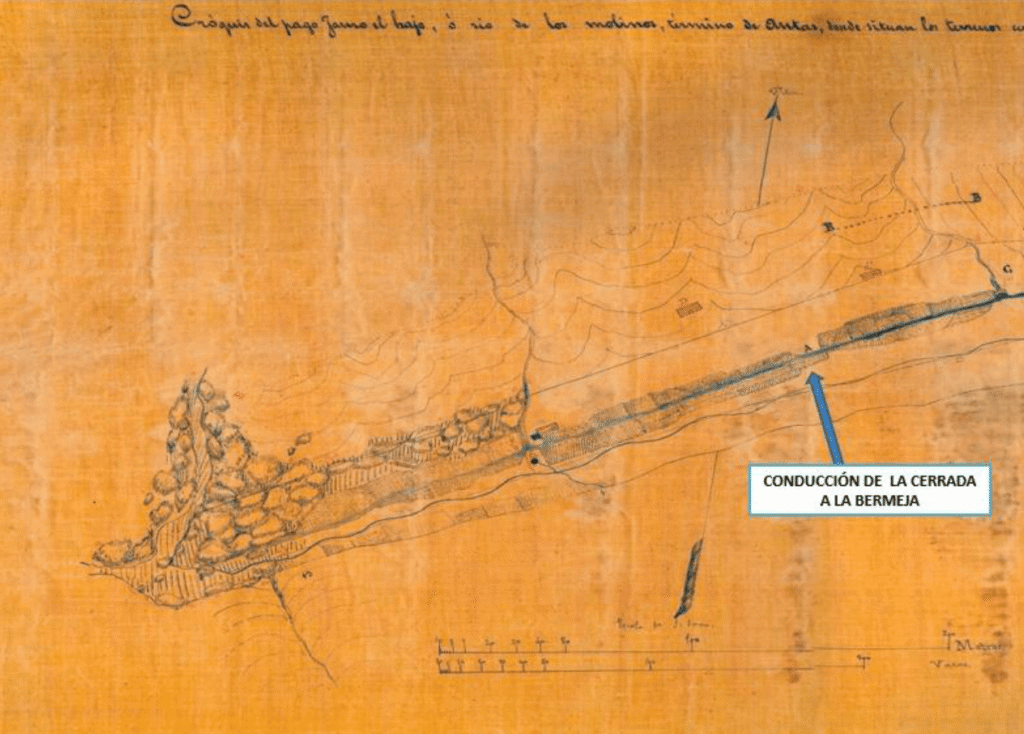
The map referred to was used as cartographic evidence in the litigation initiated by the minor Isabel Silva, legally represented by the lawyer Don Antonio María Ballesteros, against the Town Hall of Antas, in relation to the possession of certain lands. Behind this legal action, according to various local sources, was the well-known “black hand”, a network of private interests that sought to prevent the collection of water, to protect their own use of the Cabezo del Moro spring.
This plan was provided by Mr. Pedro Giordano Márques Martínez, who also indicated that another copy is in the archives of the Town Hall of Antas. The document originally belonged to his uncle, the priest Andrés Martínez, former parish priest of Cuevas del Almanzora, belonging to the well-known Martínez family, nicknamed “los fragueros”. The area included in the plan included fundamental hydraulic infrastructures such as mills, springs, and the emblematic four fountains of La Bermeja, historical origin of the pago de La Huerta.
These lands were of communal character, as evidenced by the plenary agreement of the City Council of Antas, dated January 15, 1800, which determined the planting of poplars in the well-known Alameda del Rey, forcing each neighbor to plant four specimens.
Beginning in the mid-19th century, large fortunes derived from commerce and mining began to actively invest in irrigated land, which generated a growing demand for water. Among the main landowners were the Orozco, Anglada and García Ruiz families, with estates distributed in strategic areas such as the
Real Alto de Antas, Real Bajo de Vera, la Cruz de Antas, and rural areas extending to Palomares, Esparragal, Jara, Llanos de Rosa and from Vera to Garrucha.
In order to guarantee the water supply for its properties, the Sociedad de las Tres Fuentes ( Fuente Chica, Fuente Grande and Fuente Nueva) was constituted in 1863, with a capital stock of 810,000 reales, divided into 300 shares at the rate of 2,700 reales each. The main shareholders were:
- Orozco Family: 53 shares (30 from the father, 15 from Juan Antonio and 8 from Ramón).
- Anglada Family: 37 shares (Jacinto 12, Juan 9 and his mother Josefa Ruiz 6).
- Francisco García Ruiz: 15 shares (related to his father-in-law, Mr. Manuel GiménezRamírez). Giménez Ramírez).
Most of the shareholders were from Vera, some from Garrucha, and only four residents of Antas, who owned a total of four shares. four residents of Antas, who owned a total of four shares.
In 1867, the lawyer and landowner D. Luis Giménez Cano, a native of Antas, executed a strategic maneuver by acquiring key lands located in the center of the main springs. In June of that year, he bought four fanegas in the Barranco de Jincar from Francisco de Haro for 800 reales, and another four fanegas from Ginés Castaño Casquet for 160 reales. These plots bordered the lands of the pagos of La Huerta, Aljariz, Los Llanos and Mendras, being of great water and legal value.
On April 7, 1867, both Mr. Luis Giménez Cano and Mr. Juan Antonio Orozco Baño (doctor in jurisprudence and neighbor of Vera), appeared before the notary of Vera, Mr. Manuel Zamora Navarro, to communicate the formal request of authorization to the Civil Governor in order to make calicatas and works of subway catchment by means of tunnels or galleries, in unirrigated and uncultivated lands belonging to several owners. The request was approved, granting them a period of six months to start the works.
As an organizational and financial response, the Sociedad de la Abundancia was founded, with an initial capital of 500,000 reais (expandable up to 1,000,000). It was structured in two sections:
1. Abundance of Antas
Luis Giménez Cano retained all 360 shares, equivalent to one hour of water per share.
Giménez Cano was mayor of Antas at that time. In this context, both the Town Hall and the Civil Governor systematically denied the requests for childbirth presented by Mr. Ramón Orozco Gerez.
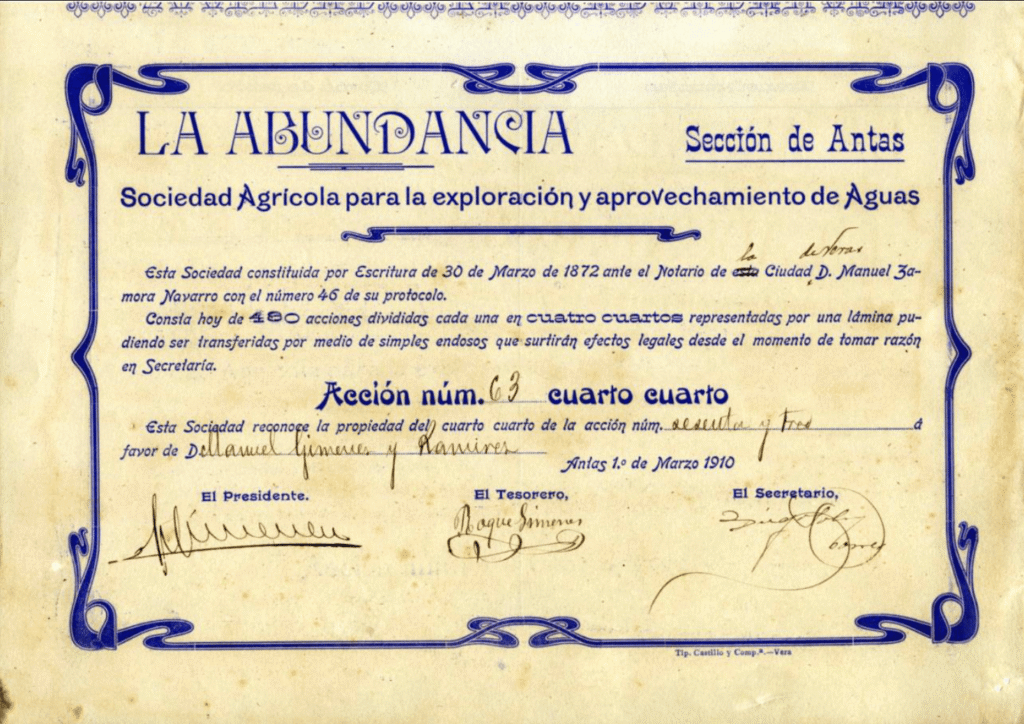
Below we can see an action of the society La Abundancia de Antas, which has been provided by Enrique Fernández Bolea.
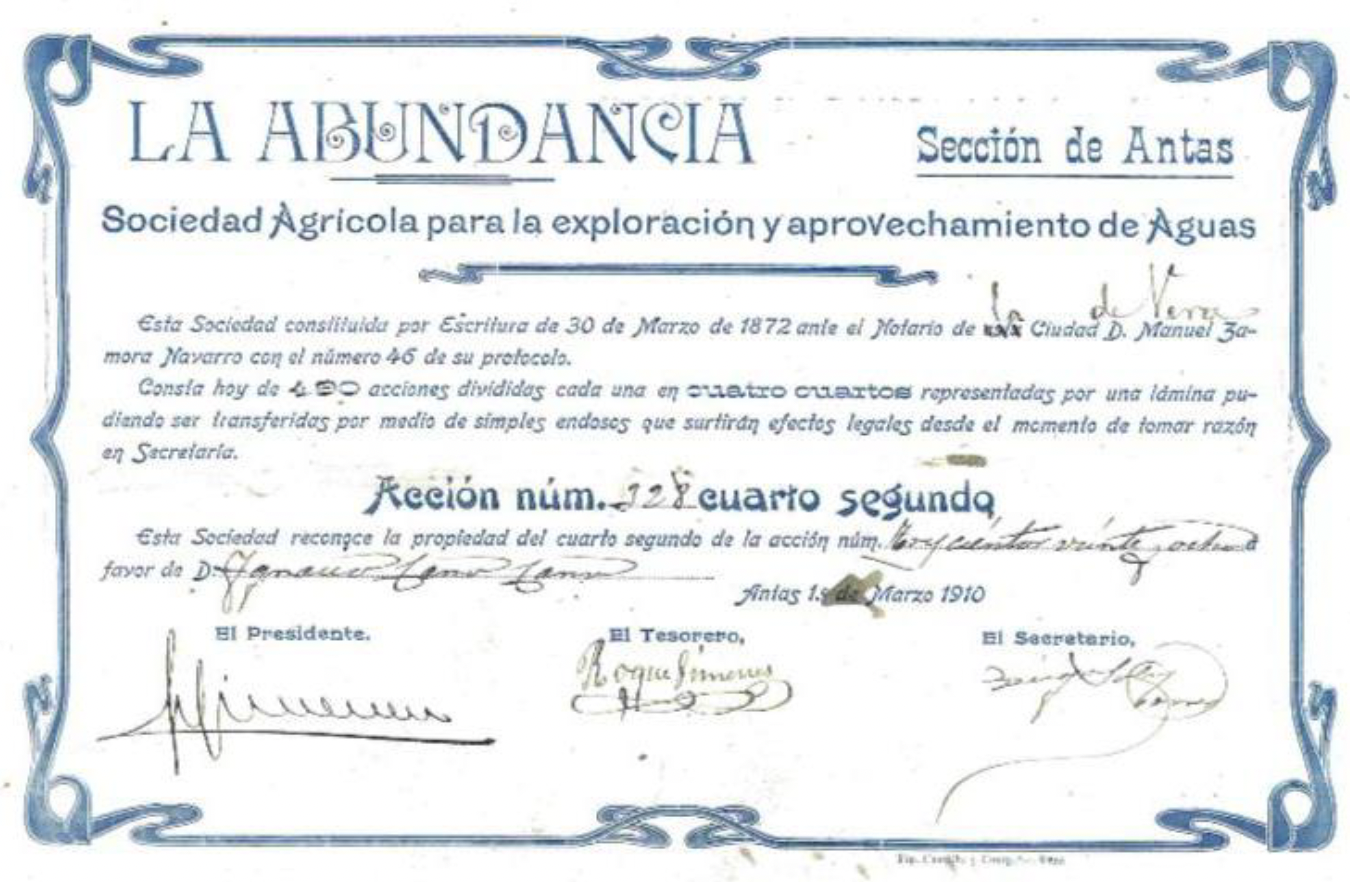
The following water action has been provided by Antonio Castaño Rodrigo, and also corresponds to the Abundancia de Antas.
2. Abundance of Vera
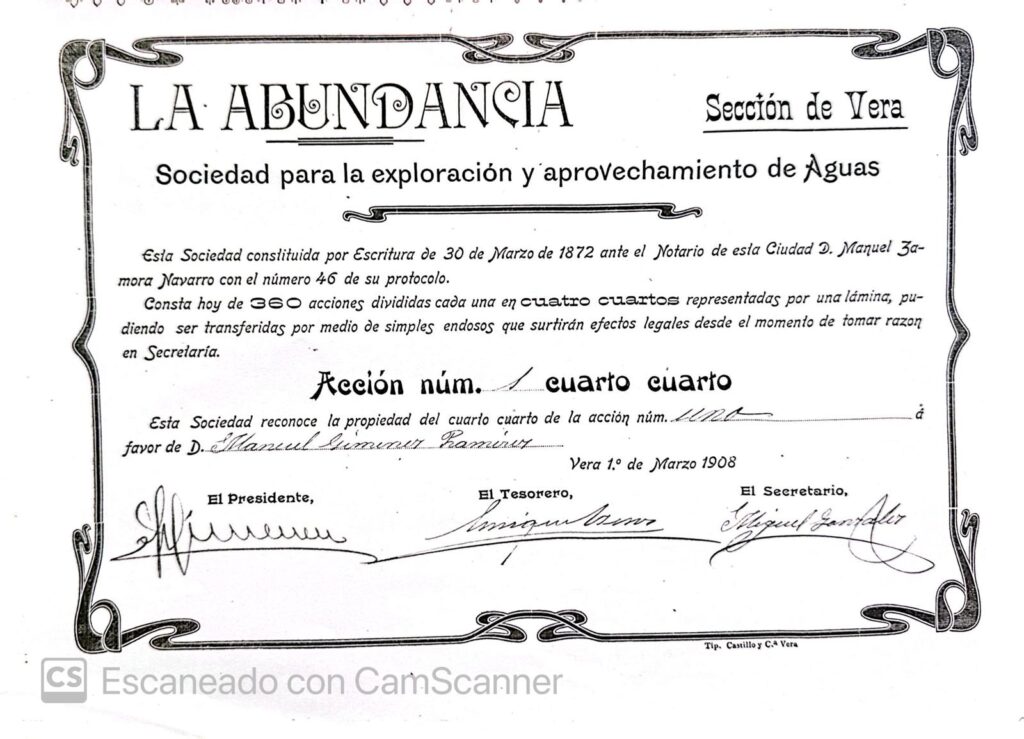
Also divided into 360 shares (1 share = 1 hour of water in 15-day shifts), it was distributed on April 18, 1867. Giménez Cano kept 100 shares and the rest were distributed as follows:
– Juan Antonio Orozco: 73 shares (Vera).
– Antonio Canga-Argüelles: 36 shares (Vera).
– Manuel Martínez Soler: 24 shares (Cuevas).
– José María Gómez: 12 shares (Almería, director of Provincial Roads).
– Diego Ramírez Sánchez: 12 shares (Vera, land registrar).
– Sebastián Rico López: 8 shares (owner).
The confrontation between Tres Fuentes and Abundancia intensified. Giménez Cano denounced the fact that the January 1867 watering by Tres Fuentes was negatively affecting the flow of its own catchment works in the Barranco de Jincar ravine. The conflict reached a tragic point on October 21, 1867, when Pedro Belmonte Rodríguez, 29 years old, died after a mass of earth fell during the gallery works. The burial was ordered by Mayor Francisco Segura, with the appearance of Mr. Ginés Cano Belmonte (secretary), Mr. Ignacio Cano Cano Cano (first deputy mayor) and Mr. Bartolomé Cano Cano Cano (owner).
Despite the pressure exerted by the Orozco and Anglada brothers, the legal disputes did not cease. Finally, on June 29, 1872, a meeting was held at the Real Alto between representatives of the three entities:
- Abundancia de Antas: Mr. Luis Giménez Cano (lawyer and owner) and Mr. Andrés Pérez López (doctor, Cuevas).
- Abundance of Vera: Mr. Sebastián Rico López and Mr. Cecilio González del
Castillo. - Three Sources: Mr. Juan de la Cruz Navarro (bookkeeper) and Mr. Juan José Núñez Segura (notary and owner).
It was agreed to merge both companies under the name La Concordia, maintaining the nominal identity of their original sections. The technical directors were appointed: Mr. Luis Giménez Cano for Abundancia and Mr. Francisco García Ruiz for Tres Fuentes, who would be in charge of coordinating the catchment works.
Despite this agreement, conflicts persisted. The small landowners of the districts of La Huerta, Aljariz, Mendras and Los Llanos, with the support of their local councils, lodged appeals with the Civil Governor denouncing the drastic reduction in the flow of essential springs such as Fuente Bermeja, due to the water supply works.
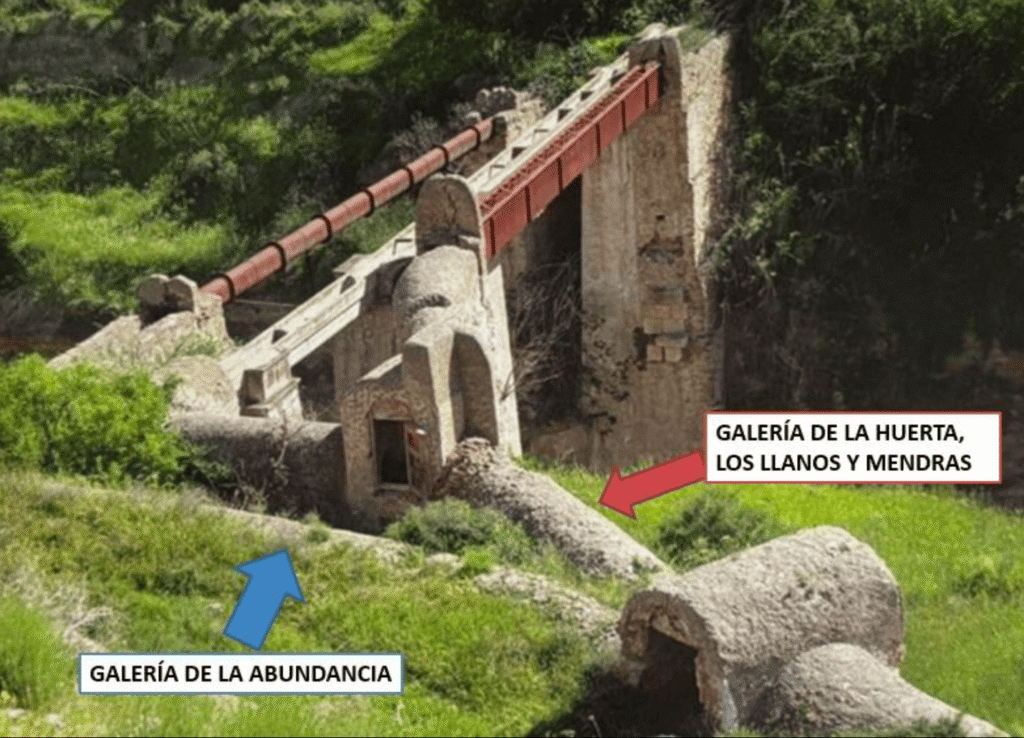
The situation reached unsustainable levels of tension. At the beginning of July 1875, a group of neighbors from Antas and La Huerta sabotaged the hydraulic infrastructures that carried water to Vera, cutting off the supply at the head of the river to divert the flow to their own lands. The area known as Los Partidores, where the diversion points to the Abundancia gallery, built by D. Ramón Orozco Gerez, were located, was the epicenter of this direct action. The following photograph is taken from the book “Apuntes para una historia de Antas. Part V. The Water.” By Don Gabriel Guerrero Martínez.
This sad and unpleasant news will be picked up by the Crónica Meriodinal newspaper, entitled events in Antas; which has been extracted from the aforementioned book.
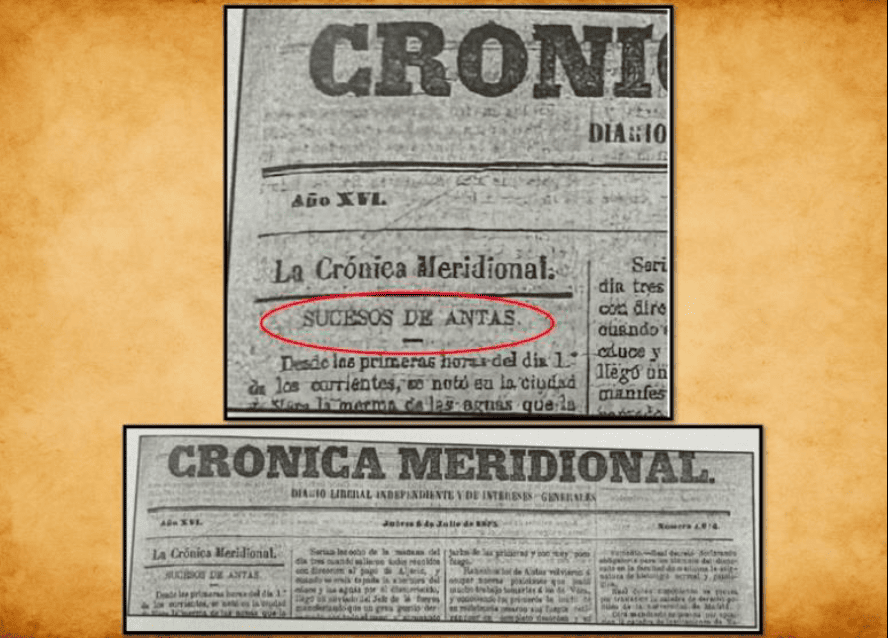
The events unfolded as follows: on July 3, 1875, the mayor of Vera, noting the interruption of the water supply to the town, ordered the displacement of eight carabineros from Garrucha along with a patrol of the Municipal Guard to restore the course of the channel in the area of the partidores, located in the area of La Viga. However, upon arriving at the site, they encountered considerable resistance from a large group of neighbors, who prevented the reinstatement of the channel, disarmed several agents and physically assaulted the municipal officers, resulting in some of them being injured by blows and bruises.
Faced with the impossibility of executing the order, the forces were forced to retreat to Vera, where they awaited the arrival of reinforcements previously requested by the municipal authority. Subsequently, a second intervention composed of twenty armed men was organized, which again went to the area in conflict with the purpose of recovering control of the riverbed and formally requesting the surrender of the occupants, demanding their withdrawal and the authorization to proceed with the repair of the hydraulic infrastructure.
The response from the demonstrators was immediate and violent: there was a barrage of firearms accompanied by the throwing of blunt objects, mainly stones. After several confrontations of varying intensity and given the disproportion of means, the residents of Antas retreated in disorder, which finally allowed the restitution of the affected riverbed.
On the Vera side there were no serious consequences other than those already mentioned (injuries among the officers), while on the Antas side there was one fatality as a result of injuries sustained during the altercations. In addition, six individuals were arrested and several firearms were seized.
The disturbances did not end with this confrontation. Upon returning to Antas, the situation became even more critical: a large group of neighbors went through the streets clamoring for reprisals against the mayor of Antas, Mr. Antonio Peregrín Giménez, whom they accused of treason for his alleged actions in the conflict. The mayor was seriously threatened by the insurrectionists, although he finally managed to safeguard his physical integrity.
After a documentary research, it has been possible to identify the deceased as Francisco Ridao Artero, who was hit by a projectile in the afternoon of July 3. Due to the seriousness of the wound, he died at 3:00 a.m. on July 4, 1875. (Today marks the 150th anniversary of this vile attack and a plaque will be placed so that his death will not be forgotten).

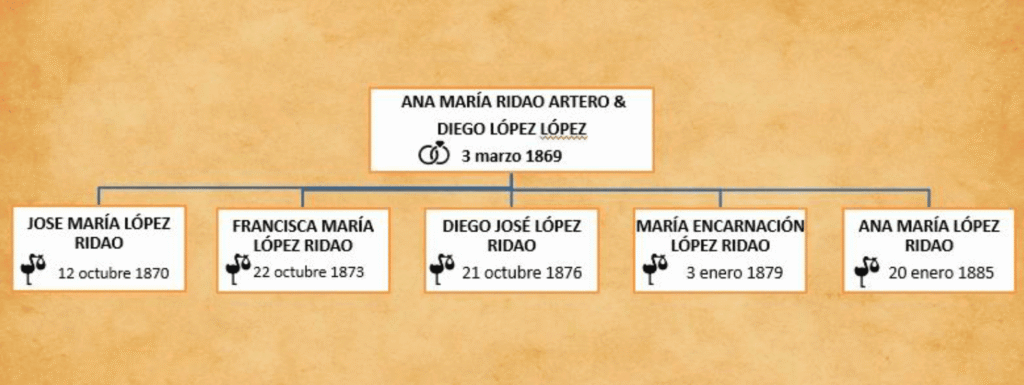
He was 22 years old, single, a market gardener, and died in his father’s farmhouse located in the pago de la Huerta. He was the son of Luis Ridao Soler and Francisca Artero Perez, both were from Antas, landowners. He owned land of waterwheel irrigated land in the plain of Las Palas, so he was affected by the water supply.
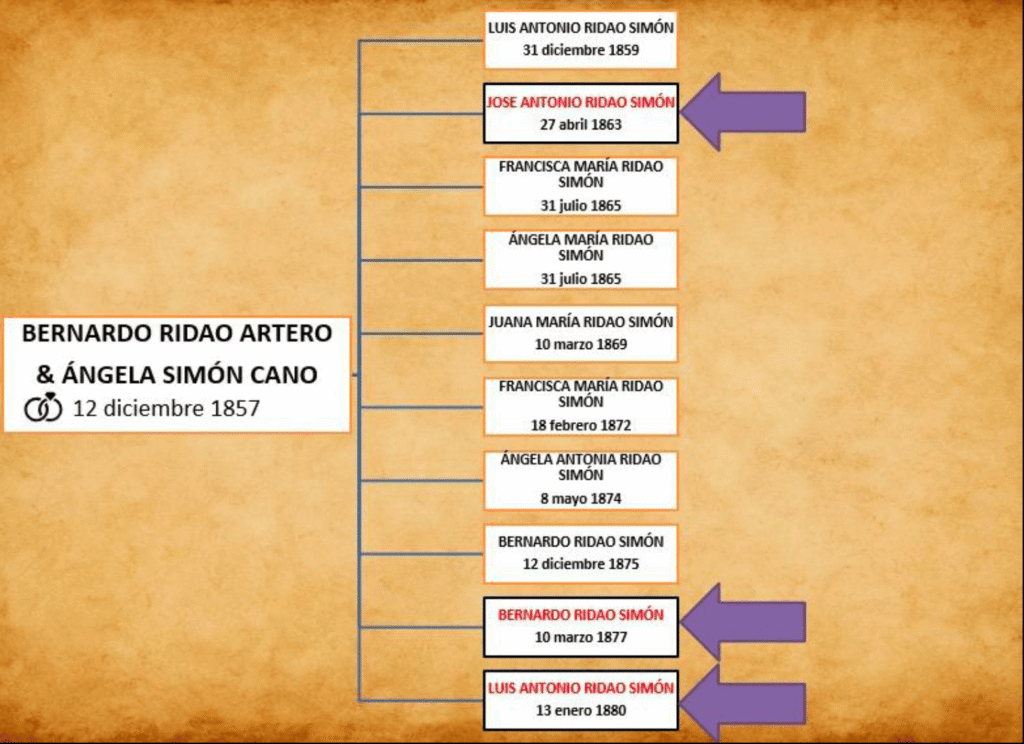
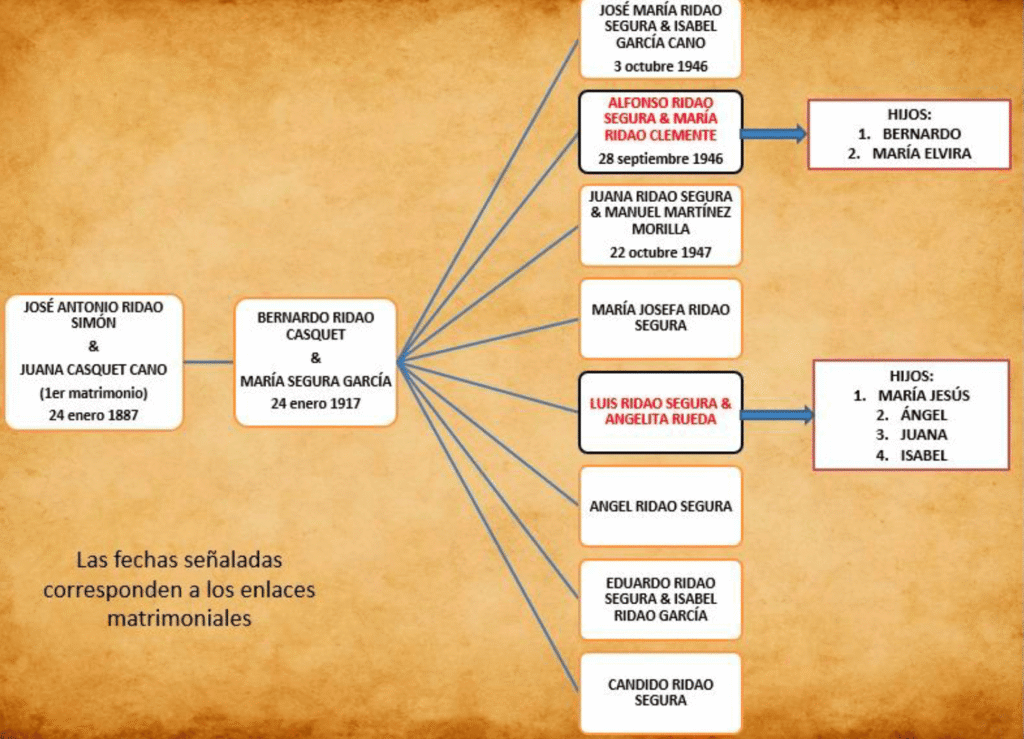
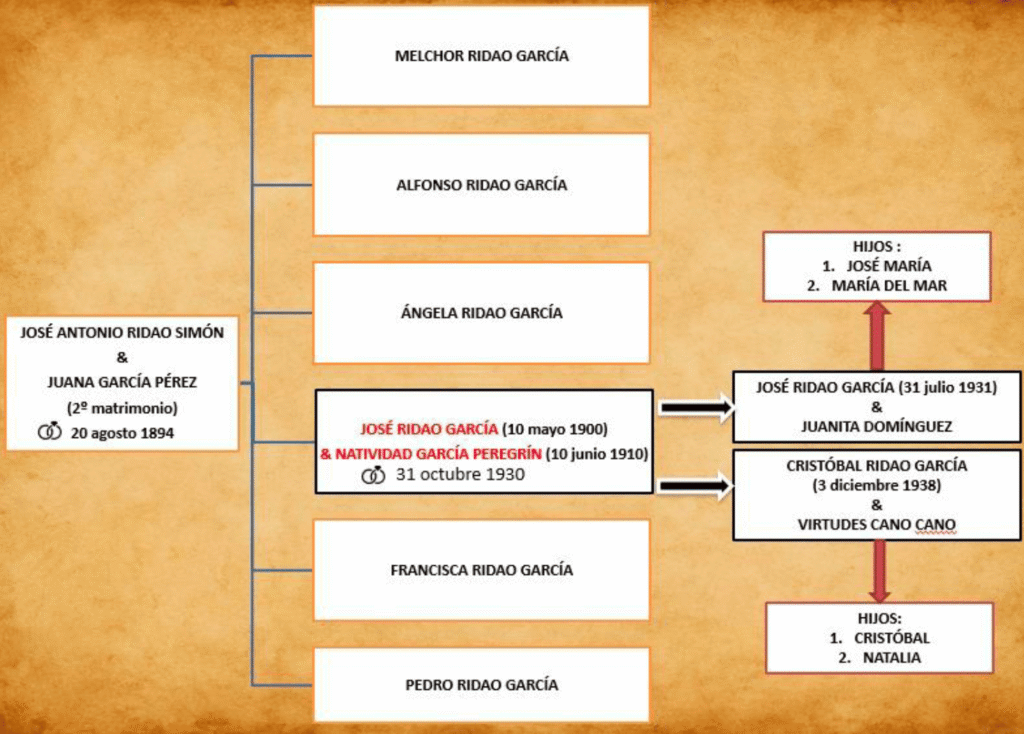
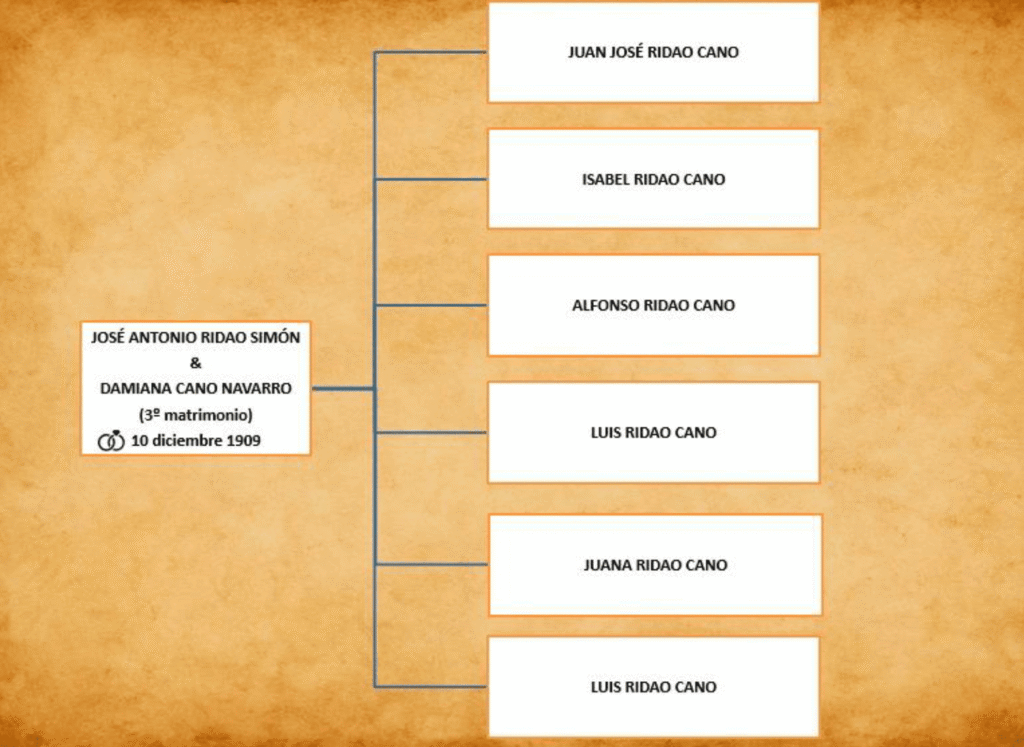
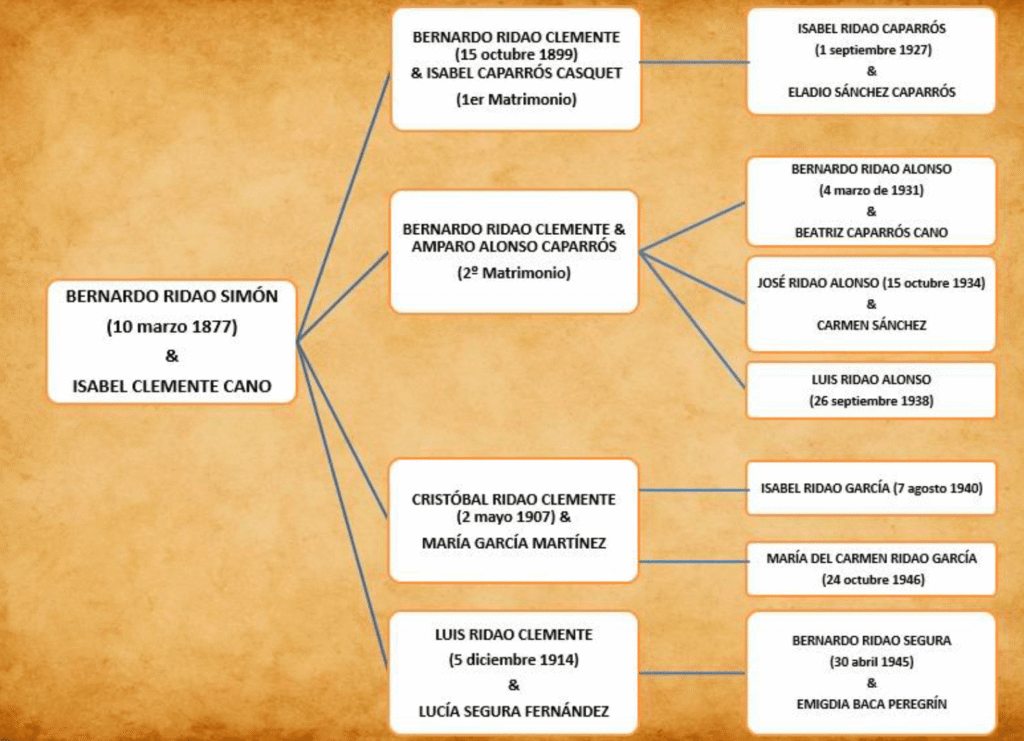
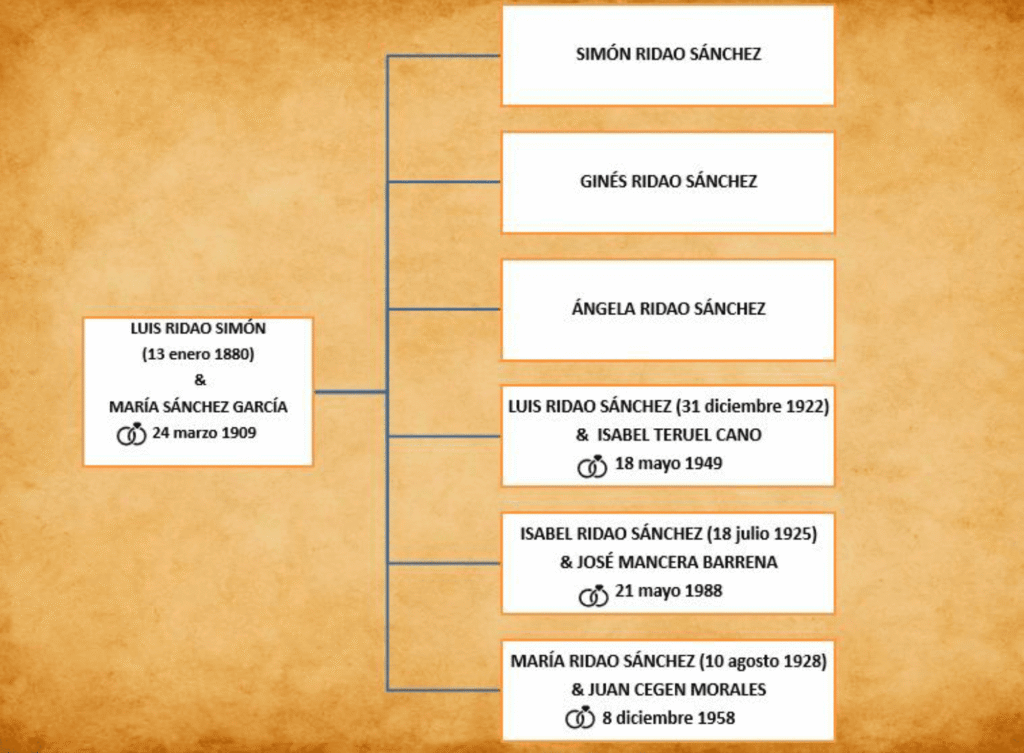
At the end of the present document, after an investigation, we can observe several family charts in which the descendants are indicated, as well as some dates of birth and marriage of these. Some of them live in Antas.
The conflict described, although of great social and economic importance, was not picked up by the press of the time, despite the existence of numerous newspapers with different political orientations, nor is there any mention of it in the chapter minutes of the city councils involved. This suggests an institutional and media silence, probably motivated by the fear of greater social conflict or by crossed interests between the different local powers.
Despite the lack of public registration, tensions between the municipalities of Antas and Vera, as well as between the Antas Town Council and the Sociedad La Concordia, continued to worsen. The main cause was the progressive decrease in the flow of the lower springs as work intensified to capture groundwater to higher areas, especially in the direction of the Ballabona. This water decrease directly affected the traditional pagos such as La Huerta, Aljariz and Mendras, whose agricultural economy depended to a great extent on the available water.
Faced with the impossibility of maintaining the conflictive situation, an agreement was finally reached between the landowners of the aforementioned pagos and the Sociedad La Concordia. On March 26, 1884, a formal conciliation meeting was held, with the following representation:
On behalf of the owners of the La Huerta, Aljariz and Mendras estates:
- D. Luis Giménez Cano, in his capacity as major owner of said payments.
- Luis Cano Giménez, Luis Cano Belmonte, Gabriel Guerrero Cano, Francisco Campos Cortés and Teodoro Ferrer, representing 60 landowners.
On behalf of Sociedad La Abundancia (Antas):
- D. Luis Giménez Ramírez (son of D. Luis Giménez Cano)
- D. Sebastián Rico Segura (son-in-law of Mr. Luis Giménez Cano)
On behalf of the La Concordia Society:
- D. Pedro García Soler
- Mr. Juan José Núñez Segura
Terms of the Agreement
- Extinguishment of litigation:
Both parties agreed to terminate all previous legal proceedings and complaints, establishing a framework of collaboration and co-responsibility in the management of water resources.
2. Assignment of water shifts:
The La Concordia Society agreed to provide a two-day water supply every two weeks, distributed as follows:
- 1 day for Pago de La Huerta
- 12 hours for the Aljariz Payment
- 12 hoursfor the Payment of Mendras
This cession was irrevocably established for the Pago de La Huerta. In the case of Aljariz and Mendras, it would be maintained until the water supply works that were already underway were successfully completed.
3. Water restrictions:
In exchange, the owners of Pago de La Huerta undertook not to collect or pump water on the left bank of the Antas River, in the section between the Barranco de Jincar mill and the upper part of the Jauro Alto, ceding these exploitation rights to Sociedad La Concordia.
4. Municipal approval:
The Antas City Council formally approved these provisions in the corresponding session.
5. Public sources:
The Concordia Society was obliged to install a backwater fountain for the use of the neighborhood in the Cuesta de las Cuevas, on the left side of the gallery that led to Vera, in the current location of Aloa, traditionally a cavity used for filling pitchers and other containers.
At the same time, the Sociedad La Abundancia de Antas undertook to provide another public fountain, connected by closed conduits, to be located at the closest point to the town center (next to the municipal reservoirs).
The existence of other backwater sources was also recognized:
- One in the gallery, at the height of the house of uncle Melchor, caretaker, grandfather of Isabel Belmonte.
- Another one in the Cuesta de la Pila, in Aljariz, located in the conduction towards Vera, outgoing in the Arco de D. Ramón Orozco, known as “el cajete”. The Town Council of Antas would assume the installation costs of the latter two.
6. Technical direction of deliveries:
D. Luis Giménez Cano, for Sociedad La Abundancia, and Mr. Francisco García Ruiz, for Tres Fuentes, were appointed as permanent technical directors, in charge of supervising the catchment works under the command of the board of directors.
7. Dispute resolution:
In case of disagreement in future decisions, the parties undertook to submit the matter to arbitration, in the first instance, of:
- D. Emilio Párraga Díaz, lawyer, son-in-law of Mr. Francisco García and brother-in-law of Mr. Manuel Giménez Ramírez.
- Mr. Juan José Giménez Ramírez, lawyer, son of Mr. Luis Giménez Cano.
In case of persistent disagreement, Mr. José Joaquín Navarro, canon of the Cathedral of Almería, would be appointed as the final arbiter .
This agreement represented a turning point in the long-standing water conflicts between Antas, Vera and the different hydraulic societies, although it was only a temporary truce in the complex process of regulating the use of water resources. These illuminations allowed the extension of irrigation in Antas and Vera. We have data from the Fuente Nueva de Vera (three springs). In 1870 they extracted 5 L/sec, and towards 1880 they extracted 90 L/sec; this made possible the passage from a subsistence agriculture to an export agriculture, in which citrus fruits such as oranges, lemons and to a lesser extent, mandarins predominated. Subsequently, grapes for shipment. All this led to the creation of the Agricultural Colonies, where most of the products were exported to cities such as Paris, Marseilles, London and New York.
UNVEILING OF PLAQUE ON MONOLITH IN HONOR OF FRANCISCO RIDAO ARTERO
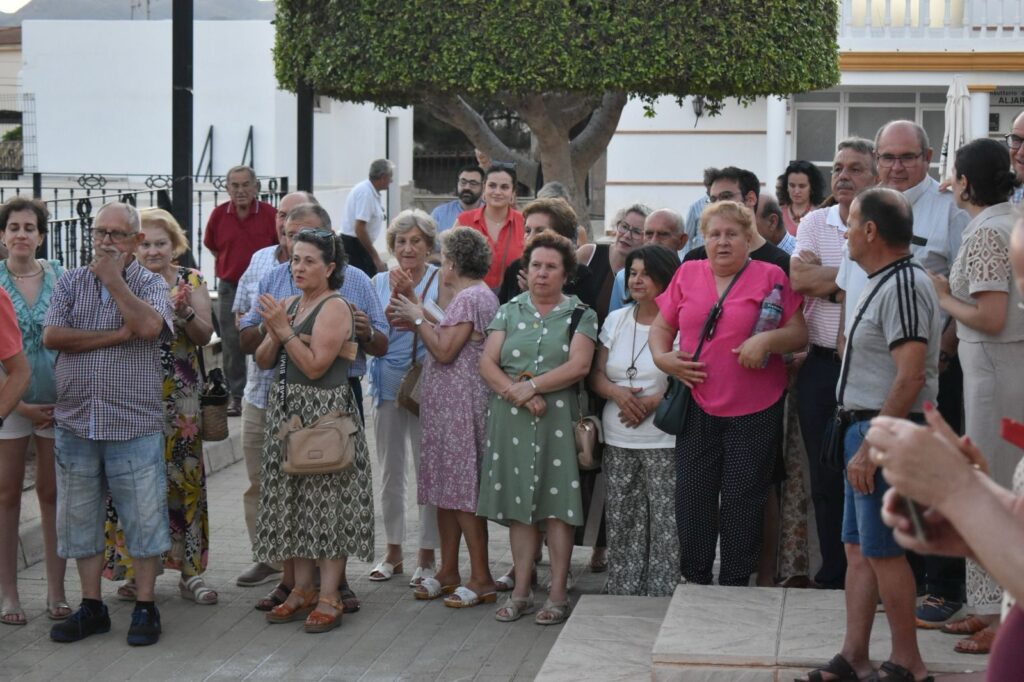
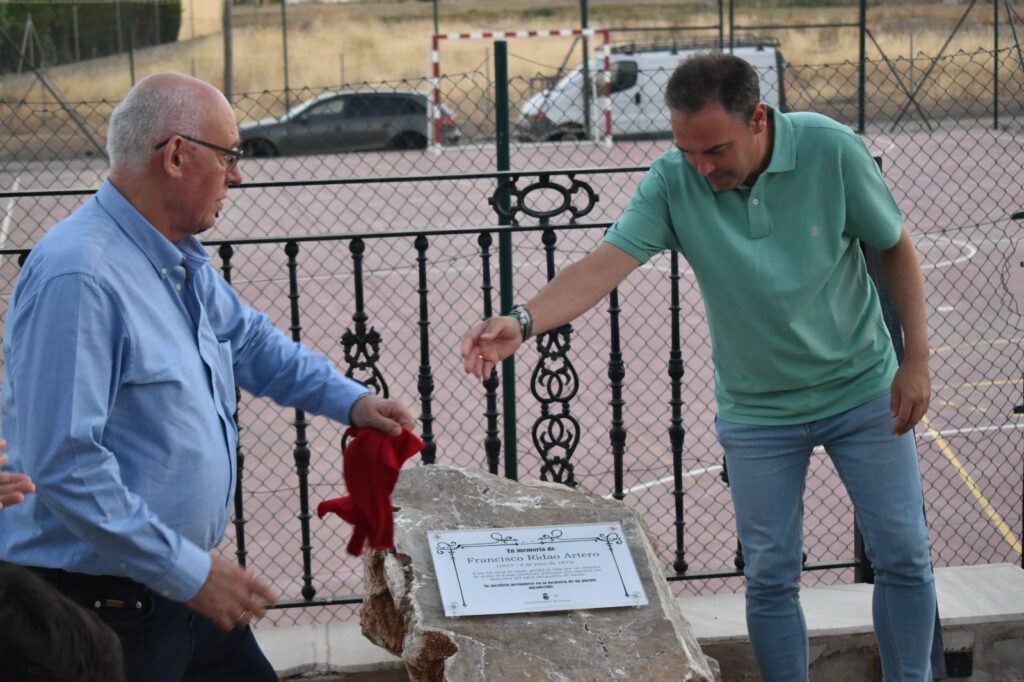
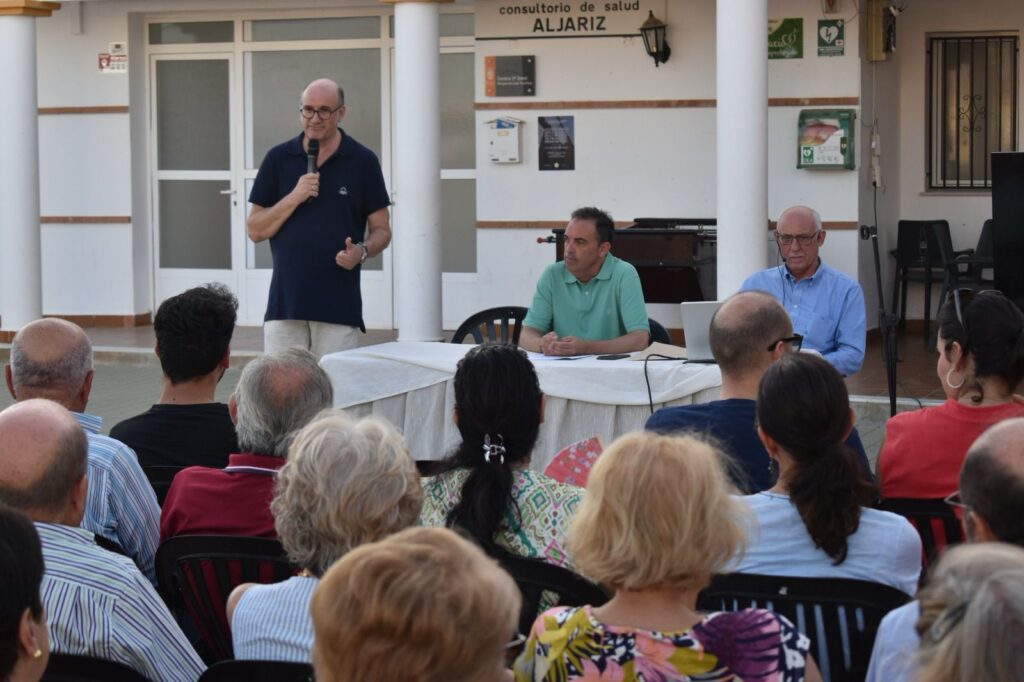
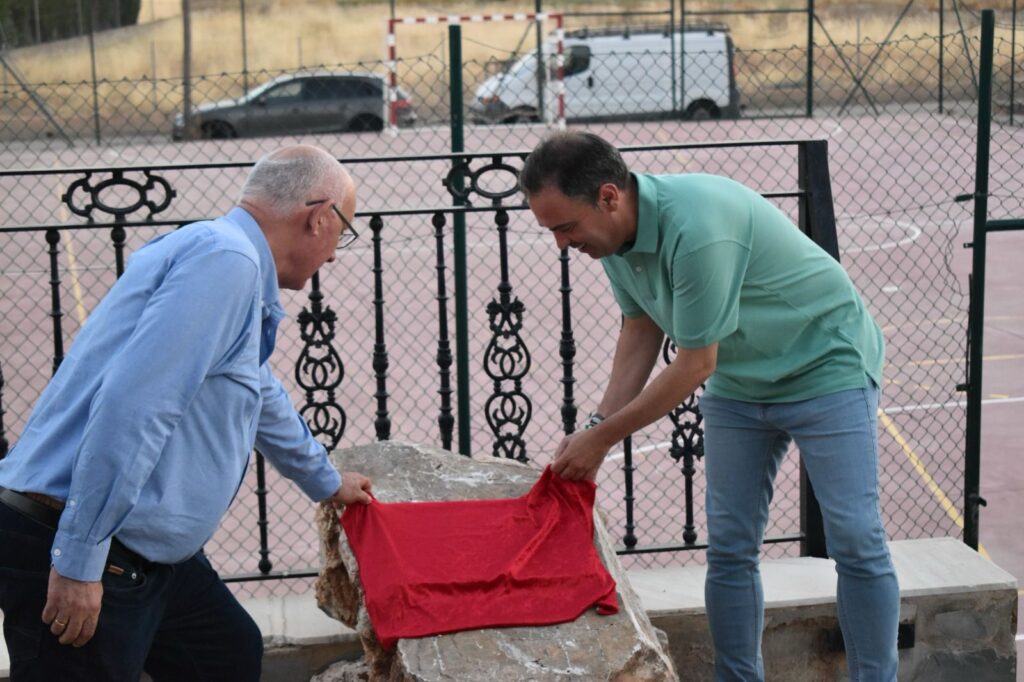
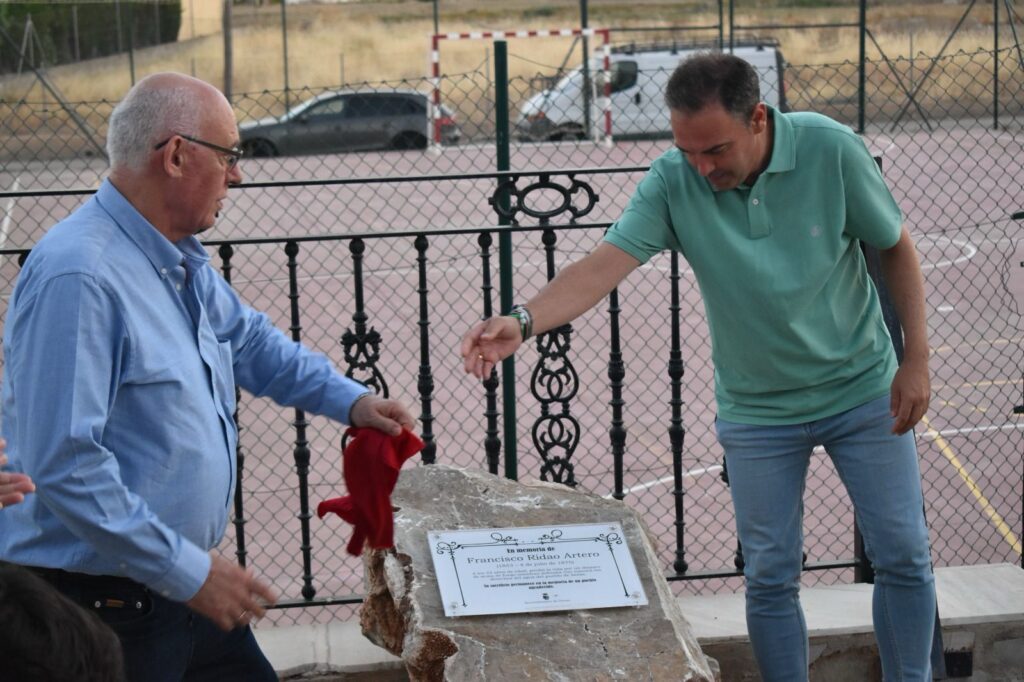
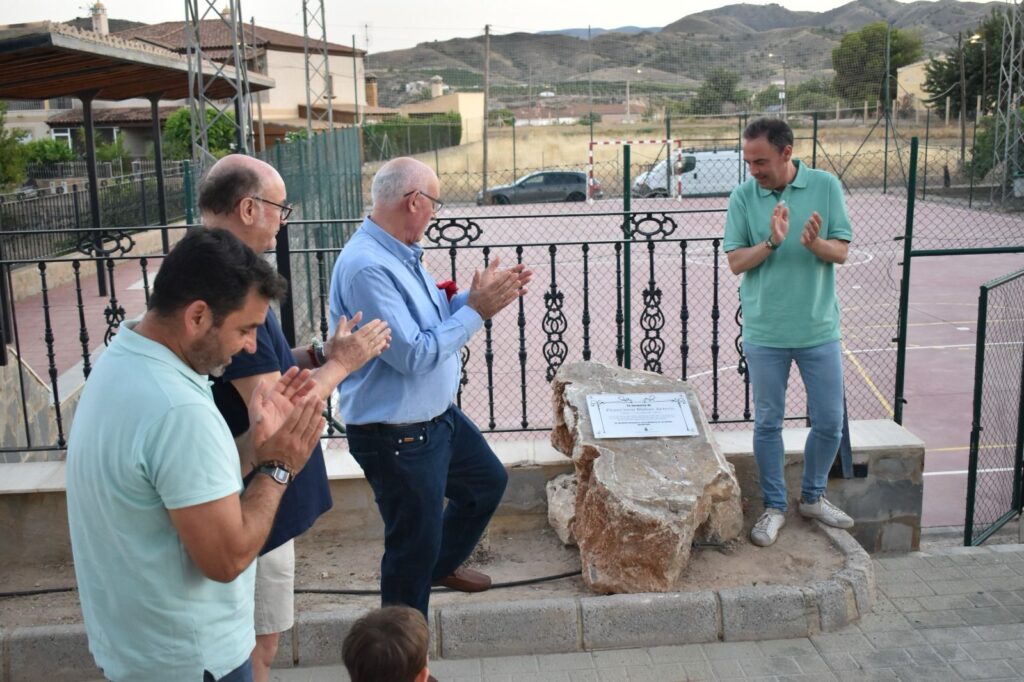
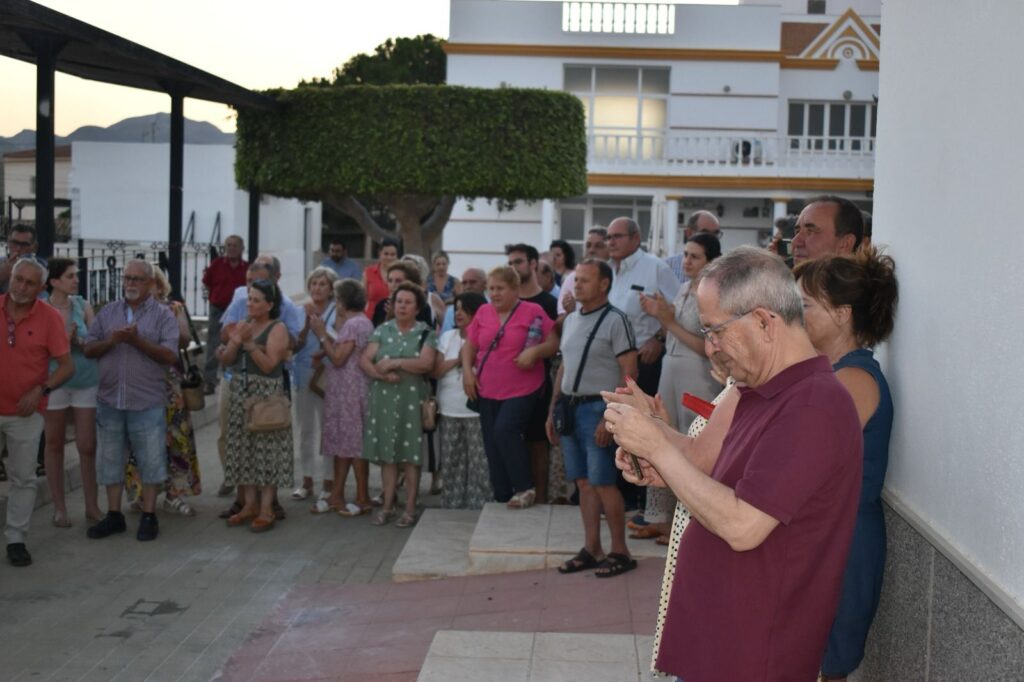
At the end of the ceremony, a plaque was unveiled so that the death of this neighbor would not be forgotten.
The plaque was unveiled by the Mayor, Pedro Ridao Zamora, and the Official Chronicler, Luis Artero Ridao. It reads:
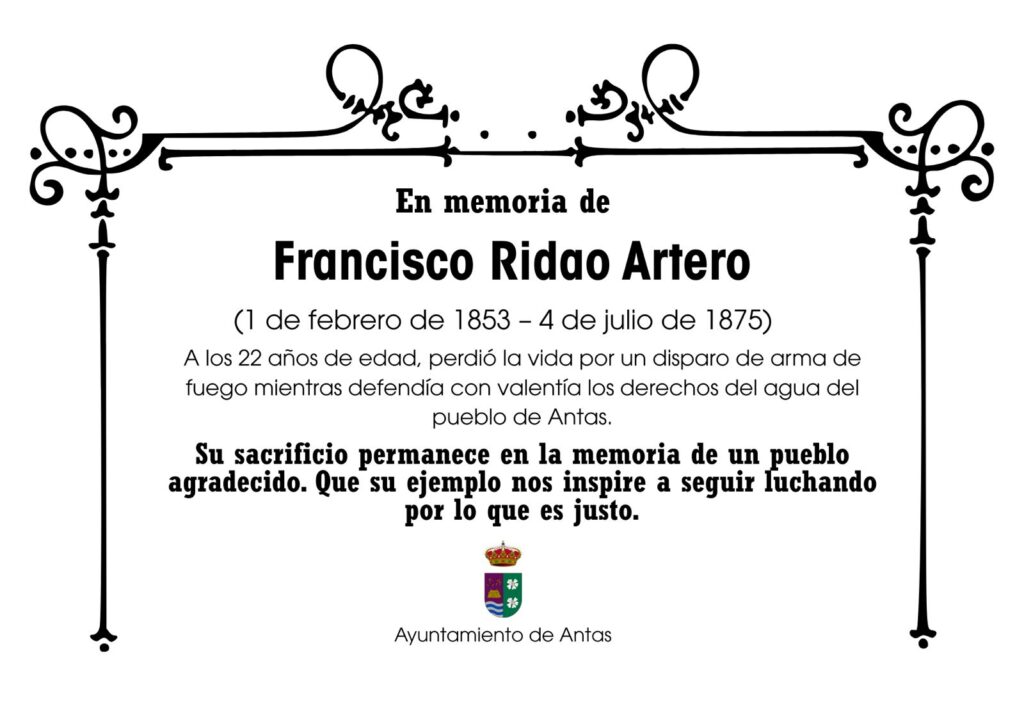
In memory of Francisco Ridao Artero
(February 1, 1853 – July 4, 1875)
At the age of 22 he was shot and killed while defending the water rights of the people of Antas.
His sacrifice remains in the memory of a grateful people. May his example always inspire us to fight for what is just.
Let me end this presentation by expressing that it has been a profound honor for me to offer this conference in Aljariz. As many will know, I have personal ties to this land: my paternal roots are from La Huerta and Aljariz. My father was Luis Artero Rodríguez, son of Luis Artero Rodríguez, known as Luis el Moreno or Luis el Huevero – nicknames that my father inherited and that I myself carry with pride, together with Luis el de Adelia.
My grandmother was Catalina Rodríguez Rodríguez, known as Catalina la Pastora.



What caused the conflict over water between the villagers of Antas and the authorities from Vera, and how did this struggle escalate by July 1875?